
Twin Falls County Criminal Court Records
A criminal court record is the court-maintained case file. It begins when a complaint, information, indictment, citation, or other charging document is filed and the case enters the District Court or Magistrate Division. In Twin Falls County, the Clerk of the District Court maintains the court record side, while the prosecutor presents criminal charges and law enforcement maintains separate arrest, jail, and report records.
Misdemeanors are tried in the Magistrate Division. Felonies are handled by district judges after preliminary proceedings, but felony cases often start with magistrate events such as first appearance and preliminary hearing. Magistrate judges also hear infractions, warrant applications, and other high-volume matters that can connect to criminal dockets.
The full criminal case file is broader than the charge list. For a closer look at charges filed after an arrest, use the body discussion on Twin Falls County arrest records and court charges; for all case categories, use the broader court-record process.
Search Twin Falls County Criminal Cases
The main public search path is the Idaho iCourt Portal. Use Smart Search for party names or case numbers, Search Hearings for criminal calendar dates, and Make Payments for eligible balances. The public portal may show case status, hearing events, docket entries, party indexes, and selected filings when they are not sealed or exempt.
- Search by full case number when available because it is the most precise route.
- Search by defendant name in Last, First Middle Suffix format when the case number is not known.
- Use advanced filters for Twin Falls County, criminal case type, file date, case status, or judicial officer.
- Open the case summary and compare the charges, hearing events, plea, disposition, and sentence entries.
- Use Search Hearings for arraignment, preliminary hearing, trial, sentencing, or review dates.
- Request copies from the clerk or use a courthouse kiosk when the public portal does not show the needed document.
Portal limits matter in criminal files. Sealed cases, shielded criminal case records, presentence investigation reports, pending warrant materials, grand jury material, and some juvenile records are not visible to ordinary public users. If a sheriff arrest report or jail booking record is needed, that request uses the sheriff records path rather than the court case portal.
Twin Falls Criminal Case Flow
The Fifth Judicial District criminal guide describes the practical path. A case often begins with a complaint based on police investigation or citizen accusation. The court may issue a warrant or summons. A first appearance advises the defendant of rights and next steps. Felony matters may include a preliminary hearing where the prosecutor must show probable cause. If a felony is bound over, later events move to district court.
Case flow: Charges Filed › First Appearance › Arraignment › Pretrial and Motions › Plea or Trial › Disposition › Sentencing
| Stage | What Happens |
|---|---|
| Complaint or citation | The accused offense is filed, and the court case begins. |
| First appearance | The court advises rights, addresses release or custody, and sets next events. |
| Arraignment | The charge is addressed and a plea may be entered. |
| Preliminary hearing | In felony matters, the prosecutor presents probable-cause evidence before bind-over. |
| Plea or trial | The case resolves by plea, dismissal, acquittal, or verdict after trial. |
| Sentencing | The court imposes jail, prison, probation, fines, restitution, treatment, or other terms after conviction. |
What Twin Falls Criminal Records Show
Criminal court records can show the accusation, but also the court's handling of the accusation. The public record may include a complaint, summons or warrant entry, rights advisement, plea, motion practice, preliminary hearing result, bond, order, plea agreement reference, trial entry, judgment, sentence, probation terms, restitution, and appeal notices. Some content may be withheld from the public record even when the case itself is visible.
| Field | What It Shows |
|---|---|
| Case number | The court number used for docket search, payment lookup, and clerk requests. |
| Defendant | The person charged in the criminal case, usually indexed by name. |
| Charge | The alleged offense, severity, complaint or citation basis, and later amendments when public. |
| Bond or custody entry | Release conditions, bond setting, hold reason, or related court event when shown. |
| Plea | The defendant's formal answer, such as guilty or not guilty. |
| Disposition | The outcome of a charge or case, including conviction, dismissal, acquittal, or other result. |
| Sentence | The punishment or terms imposed after conviction, including probation, jail, restitution, or treatment references. |
| Hearing entries | Arraignment, preliminary hearing, pretrial conference, trial, sentencing, review, or compliance dates. |
Twin Falls Charges vs Convictions
A charge is an accusation filed in court. A conviction is a final result based on a guilty plea, verdict, or other qualifying adjudication. Twin Falls County criminal court records can show charges that were amended, reduced, dismissed, or resolved differently from the first filing. Reading only the original charge can misstate the outcome.
| Point | Charge | Conviction |
|---|---|---|
| Meaning | An alleged offense filed by complaint, citation, information, or indictment. | A final criminal finding or plea outcome. |
| Proof stage | May rest on probable cause or accusation. | Requires plea or proof beyond a reasonable doubt at trial. |
| Record effect | May remain on a public docket even if later dismissed unless sealed or shielded. | Can lead to sentence, probation, restitution, and criminal-history reporting. |
| Best field to check | Charge list and amendments. | Disposition, judgment, and sentence entries. |
Twin Falls Criminal Case Offices
The Twin Falls County Prosecuting Attorney represents the state or county in criminal prosecutions. The official county page names Grant P. Loebs as Prosecuting Attorney, with the criminal phone listed as 208-736-4020. The Fifth Judicial District criminal case guide explains that the prosecuting attorney presents evidence at preliminary hearings to show probable cause that a crime was committed and that the defendant committed it.
The Twin Falls County Prosecuting Attorney page is the local source for prosecution office contact and charging context.
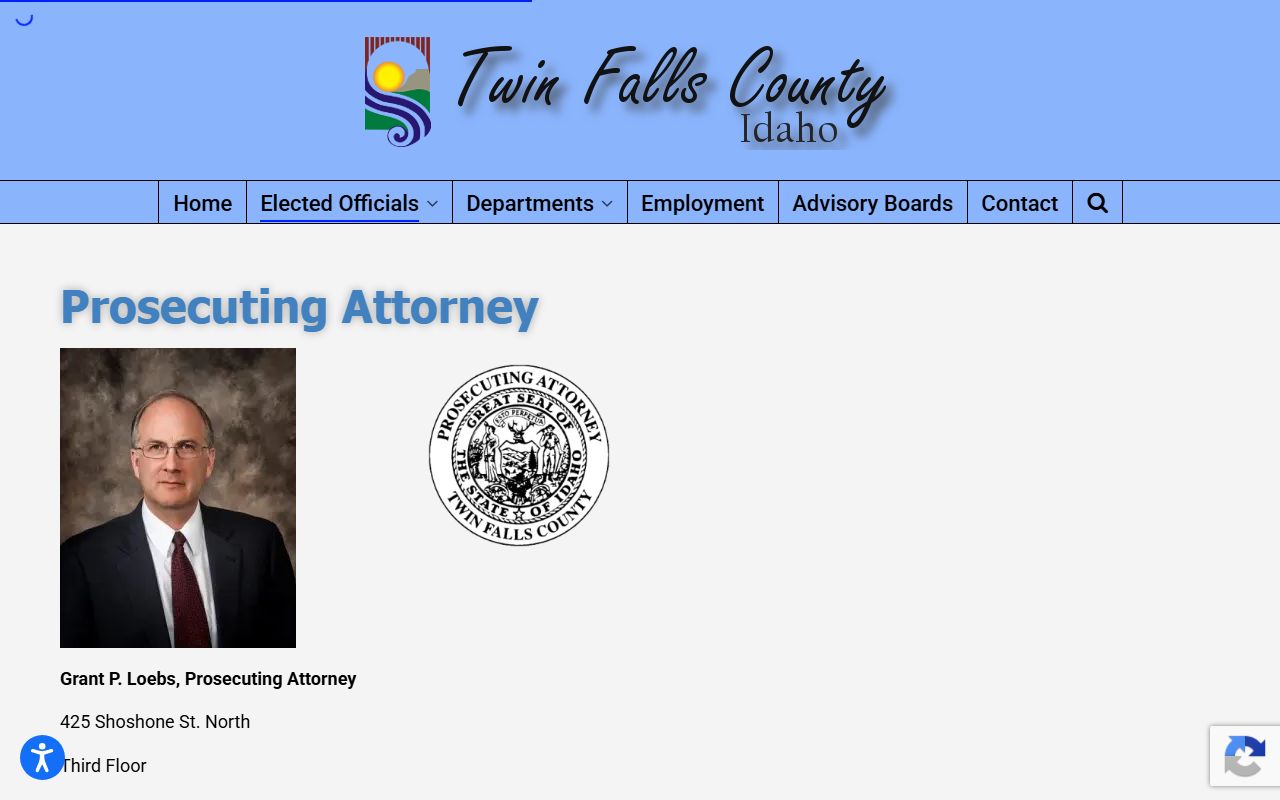
That office is relevant to criminal court records because filed charges and later amendments are prosecution actions tracked by the court.
The Idaho State Public Defender contact page lists Twin Falls County offices for public defense after Idaho moved to a statewide public defender system.
Defense appointment and representation details may appear in court events, but attorney communications and strategy are not public case-file content.
Twin Falls Criminal Treatment Courts
Problem-solving courts can affect criminal case records because eligible defendants may be routed into structured treatment and supervision rather than a standard sentencing path. Twin Falls County participates in Fifth Judicial District programs including felony drug court, DUI court, mental health court, and veterans treatment court. These programs do not erase the court record by themselves, but they may add reviews, compliance hearings, treatment orders, and program-status entries.
The Fifth Judicial District Felony Drug Court page lists the Twin Falls coordinator, location, and weekly public court schedule.
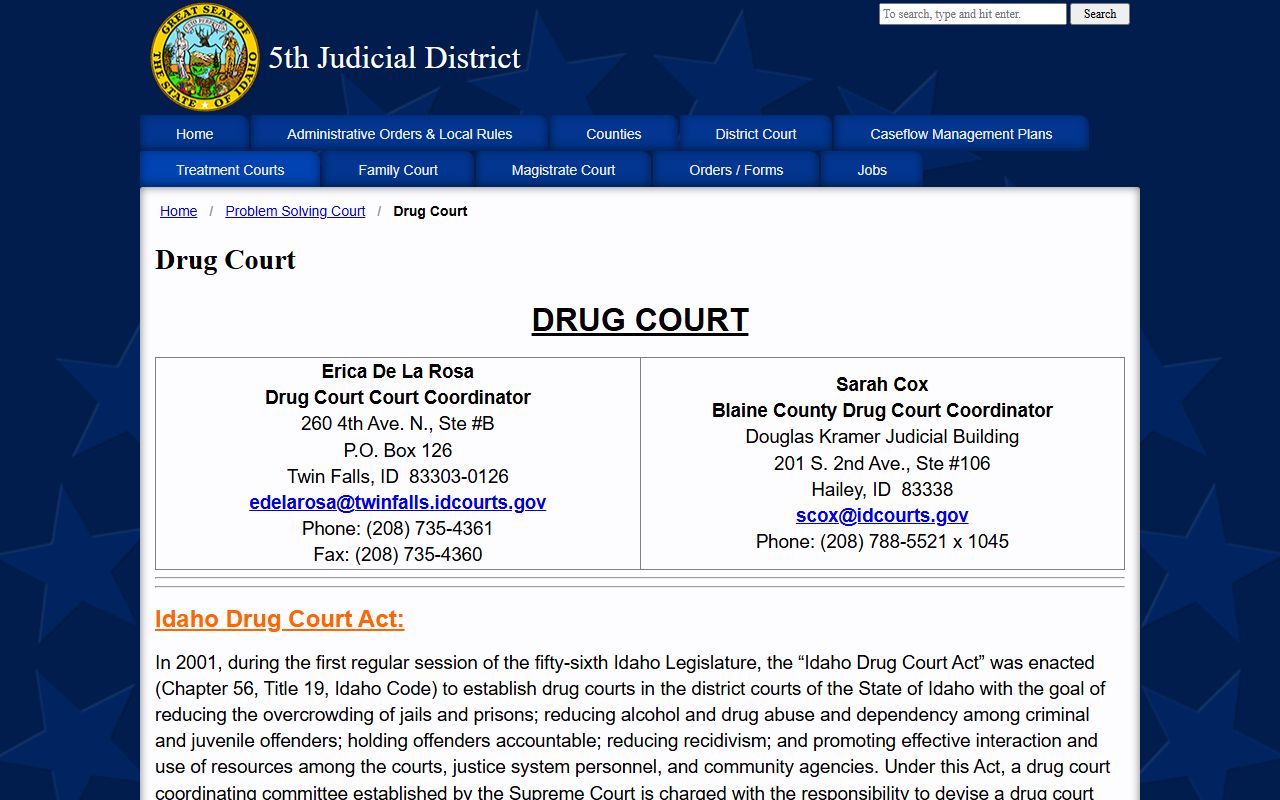
Drug court records should be read as part of the criminal case path when the docket shows treatment-court participation.
The Fifth Judicial District DUI Court page provides the Twin Falls DUI Court coordinator and schedule.
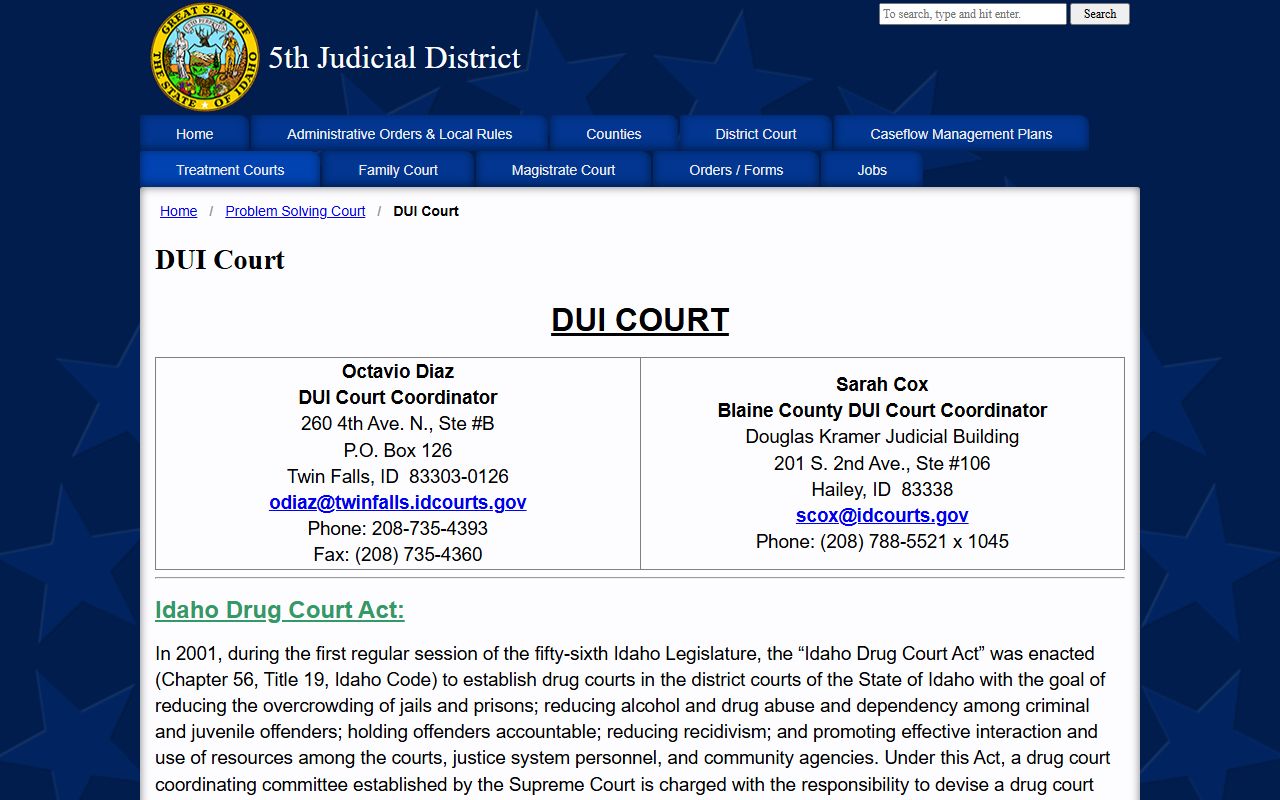
DUI court may connect traffic, criminal, treatment, and license-consequence records, so the court docket should be checked with care.
The Fifth Judicial District Mental Health Court page notes the Twin Falls program and its local schedule.
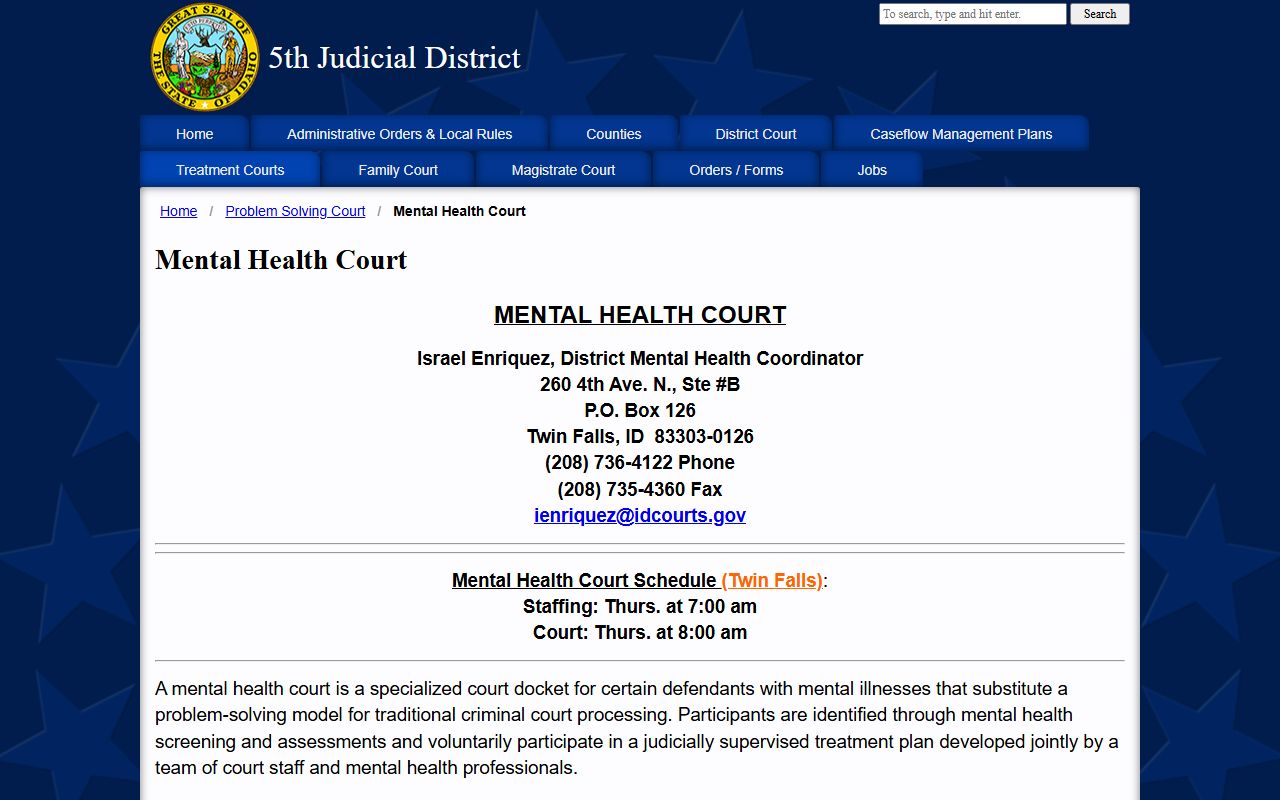
Mental health court can add review hearings while some treatment and medical details remain outside ordinary public access.
The Fifth Judicial District treatment-court source used for Veterans Treatment Court provides Twin Falls veterans court schedule and program context.
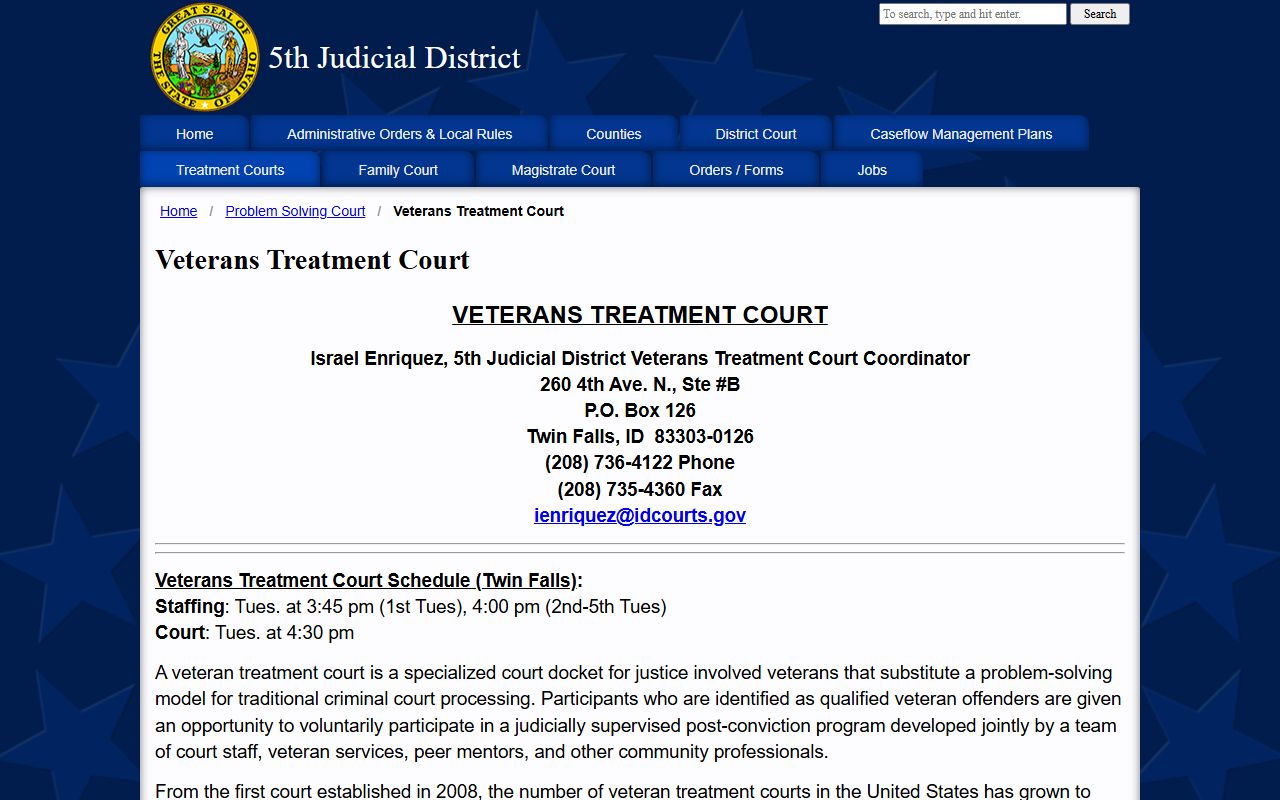
Veterans Treatment Court docket entries should be read as supervision and review events within the larger criminal court record.
Twin Falls Sealed vs Expunged Records
Idaho uses several forms of record relief, but it does not have one broad adult expungement system that erases all convictions from every court and law-enforcement repository. ICAR 32 recognizes shielded criminal case court records when an order is entered under Idaho law. Idaho Code Section 19-2604 allows certain discharge, dismissal, or felony-reduction relief after probation, while Idaho Code Section 67-3004 governs parts of the state criminal-history repository.
| Point | Sealed or shielded court record | Expunged or repository relief |
|---|---|---|
| Public portal effect | Hidden from public iCourt search when sealed or shielded. | May affect state criminal-history records if the statute and order apply. |
| Scope | Usually tied to the court file or specific events. | May involve Idaho State Police repository data or qualifying non-conviction records. |
| Order needed | Yes, when relief depends on court action. | Usually yes, and the order must identify the affected system. |
| Practical limit | Does not always remove agency copies. | Does not automatically change the court file unless the law and order do so. |
Public Access to Twin Falls Criminal Records
Criminal court records are judicial records governed by Idaho Court Administrative Rule 32. Public access is broad, but juvenile records, presentence investigation reports, pending warrant material, grand jury records, personal identifiers, sealed events, and shielded case records may be blocked. Idaho Code Section 20-525 adds separate limits for juvenile-court records.
If the public portal does not show a criminal record, the next step depends on the missing item. Use a courthouse kiosk or clerk request for court documents, the sheriff records request path for jail or arrest reports, IDOC search for prison or supervision status, and VINE for custody or court notifications. Each system has its own purpose and update cycle.
Note: A dismissed charge can remain visible in a court record unless a court order or statute limits public access.